
Lorem Ipsum is simply dummy text of the printing and typesetting industry. Lorem Ipsum has been the industrys standard dummy text ever since the 1500s, when an unknown printer took a galley of type and scrambled it to make a type specimen book.
Call Us
+911234567890Location
your1234location.meThe Birthplace of Croatia: 7th-Century Hillforts and the Slavic Arrival
Home / Strongholds & Sagas, The Dawn of Croatia, The Early Middle Ages The Birthplace of Croatia: 7th-Century Hillforts and the Slavic Arrival

0 Comments
Introduction
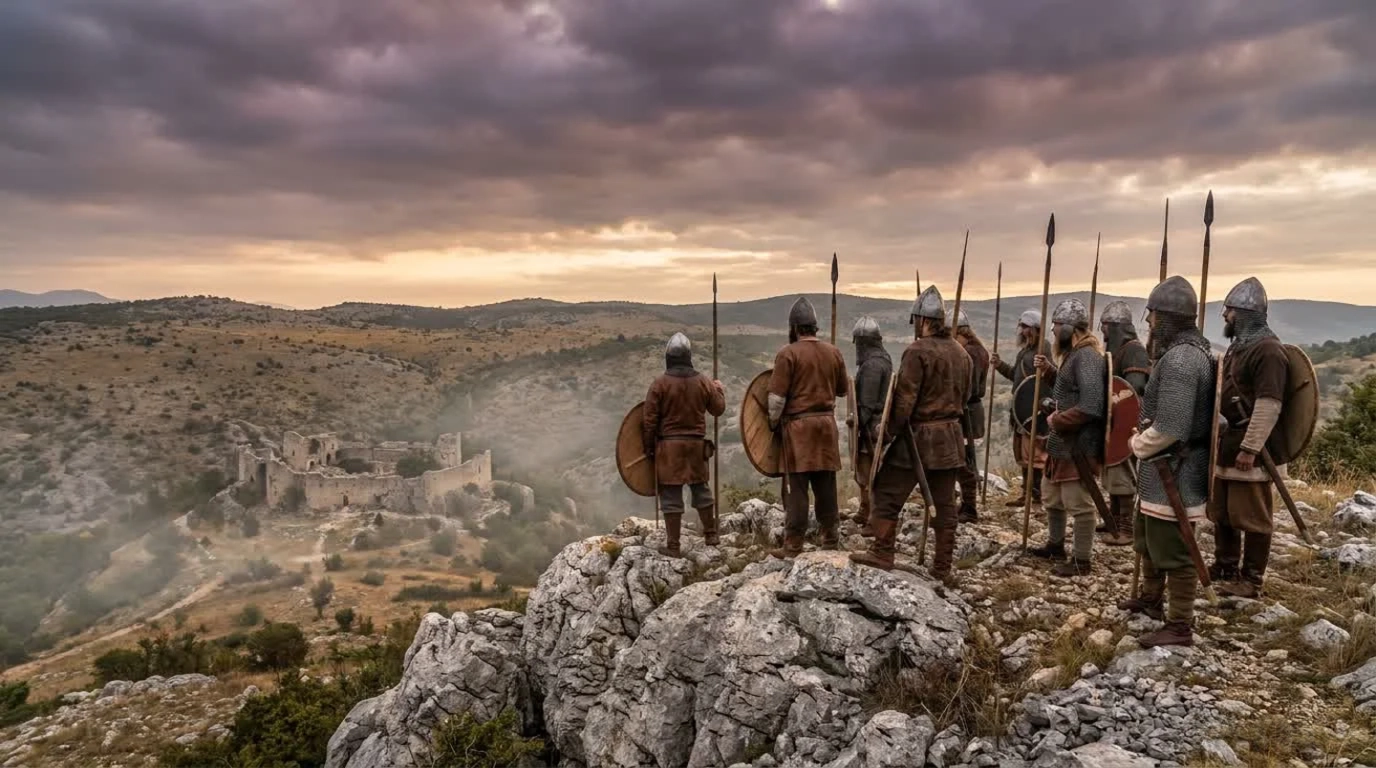
The 7th century was a time of fire, migration, and the reshaping of Europe. As the Roman Western Empire crumbled, Slavic tribes, including the early Croats, pushed south into the Roman province of Dalmatia. But who were these newcomers, where did they come from, and how did they live? The rugged canyons and high plateaus of the Dalmatian Hinterland (Dalmatinska zagora) became the immediate theater of their arrival, survival, and the ultimate birth of the Croatian nation.
The Origins: Where Did the Croats Come From?
According to historical sources, most notably the 10th-century treatise De Administrando Imperio written by Byzantine Emperor Constantine VII Porphyrogenitus, the Croats migrated to the Adriatic from a region known as White Croatia (Bijela Hrvatska).
- The Homeland: This ancient homeland was located north of the Carpathian Mountains, stretching across parts of modern-day Poland, Ukraine, and the Czech Republic.
- The Migration: Led by five brothers (Klukas, Lobelos, Kosentzes, Muhlo, and Chrobatos) and two sisters (Tuga and Buga), the Croats journeyed southward. They were invited by the Byzantine Empire to help defend the borders and drive out the destructive Avars, a fierce nomadic group that had been terrorizing the Balkan provinces.
Way of Life: How the Early Croats Lived
The early Croats were not just warriors; they were a well-organized tribal society deeply connected to the land. When they settled in the Dalmatian Hinterland, they brought distinct economic and cultural practices:
- Agriculture and Farming: Coming from fertile northern lands, they were skilled farmers. They cultivated grains like wheat, barley, and millet. In the valleys of the Hinterland, they quickly adapted to the Mediterranean climate, later learning grape and olive cultivation from the local Romanized population.
- Pastoralism and Animal Husbandry: Livestock was a primary source of wealth. The Croats raised cattle, sheep, and goats, utilizing the high mountain pastures of Dinara and Svilaja in the summer and moving to the lowlands in the winter.
- Social Structure (The Županije): The society was organized into clans or tribes. Territories were divided into županije (districts), each ruled by a župan (district leader). The supreme leader of all the tribes held the title of Knez (Duke) or Ban.
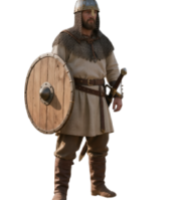
- Warfare: They were highly adaptable warriors. While they fought on foot with spears, round wooden shields, and axes, their elite warriors quickly adopted cavalry tactics, becoming a dominant military force in the region.
The Blueprint: What Were 7th-Century Fortresses?
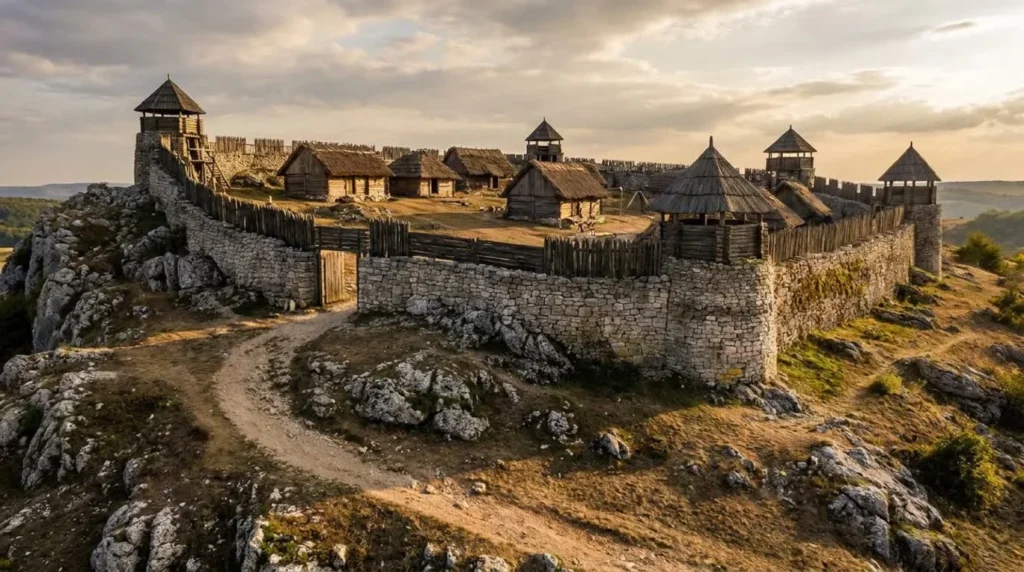
Unlike the tall stone castles of the late Middle Ages, 7th-century fortifications in the Dalmatian Hinterland were practical, defensive networks. They primarily fell into two categories:
- Byzantine Castra: Stone-walled fortifications built by Emperor Justinian’s empire along strategic roads to protect trade routes and communication between the coast and the interior.
- Prehistoric Hillforts (Gradine): Ancient, elevated positions protected by thick, dry-stone walls (suhozid) and wooden palisades, originally built by the Illyrians and reused by early Croats for safety.
The Strongholds of the Dalmatian Hinterland
Three key areas in Dalmatinska zagora highlight this dramatic era of settlement and early administration:
1. Bribir (Bribirska Glavica) – The Ancient Hub
Often called the “Croatian Troy,” this massive hillfort near Skradin was a vital Liburnian and Roman center (Varvaria). In the 7th century, early Croats seized this naturally fortified plateau. Its strategic position allowed them to control the entire valley leading to the coast. It eventually became the central seat of the powerful Šubić dukes.
2. Knin Fortifications – The Gateway
Long before the great stone fortress of Knin took its final shape, the steep hill overlooking the Krka River source was a crucial defensive point. Early Slavic settlers recognized its geographic importance—whoever controlled Knin controlled the main pass connecting northern Croatia with the Adriatic Sea.
3. The Cetina River Network (Sinj and Trilj Area)
The Cetina River valley is packed with ancient defensive positions like Tilurium (Gardun near Trilj). The early Croats integrated into these old Roman military posts, turning the river canyon into a natural shield against external raids while establishing their first tribal districts, known as županije.
The Clash: War, Refuge, and Asimilation
The initial contact was brutal. Migrating groups, often allied with the nomadic Avars, targeted major Roman administrative centers. The fall of Salona (the provincial capital) and Burnum (near Promina) forced the local Romanized population to flee.
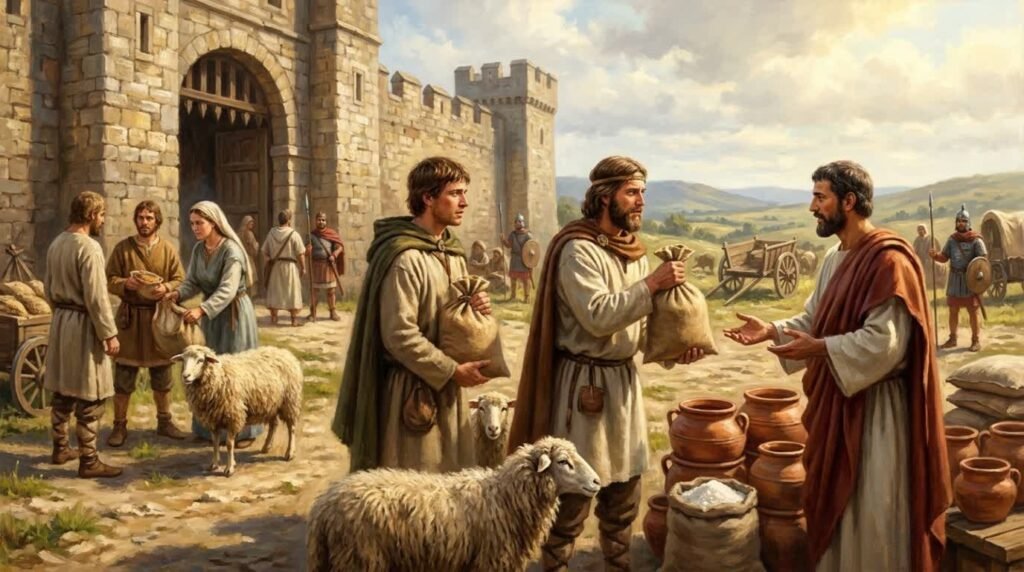
However, total war quickly turned into everyday survival. The newcomers needed the agricultural knowledge, ironworking, and maritime skills of the locals. In contrast, the remaining natives needed peace to farm and trade. Within decades, the hillforts of the Dalmatian Hinterland transformed from military targets into hubs of trade, cultural exchange, and eventually, the Christianization of the early Croatian elites.
Traveler’s Note: How to Visit Today
If you want to step onto the soil where Croatian history began, visit Bribirska Glavica. Located just a short drive from Skradin, the site is an open-air archaeological park. You can walk among Roman stone blocks, see the remains of early Slavic dwellings, and enjoy a panoramic view of the hinterland that early dukes watched over 1,300 years ago.
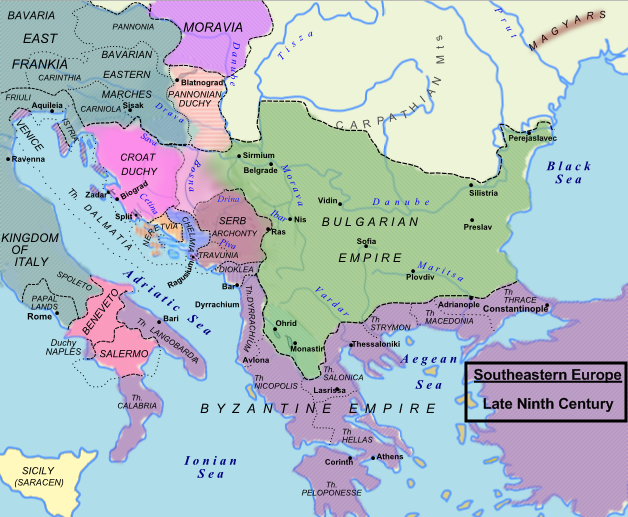
“Map of Southeastern Europe in the late 9th century, showing the established Croat Duchy (pink) after generations of settlement in the Dalmatian hinterland.”