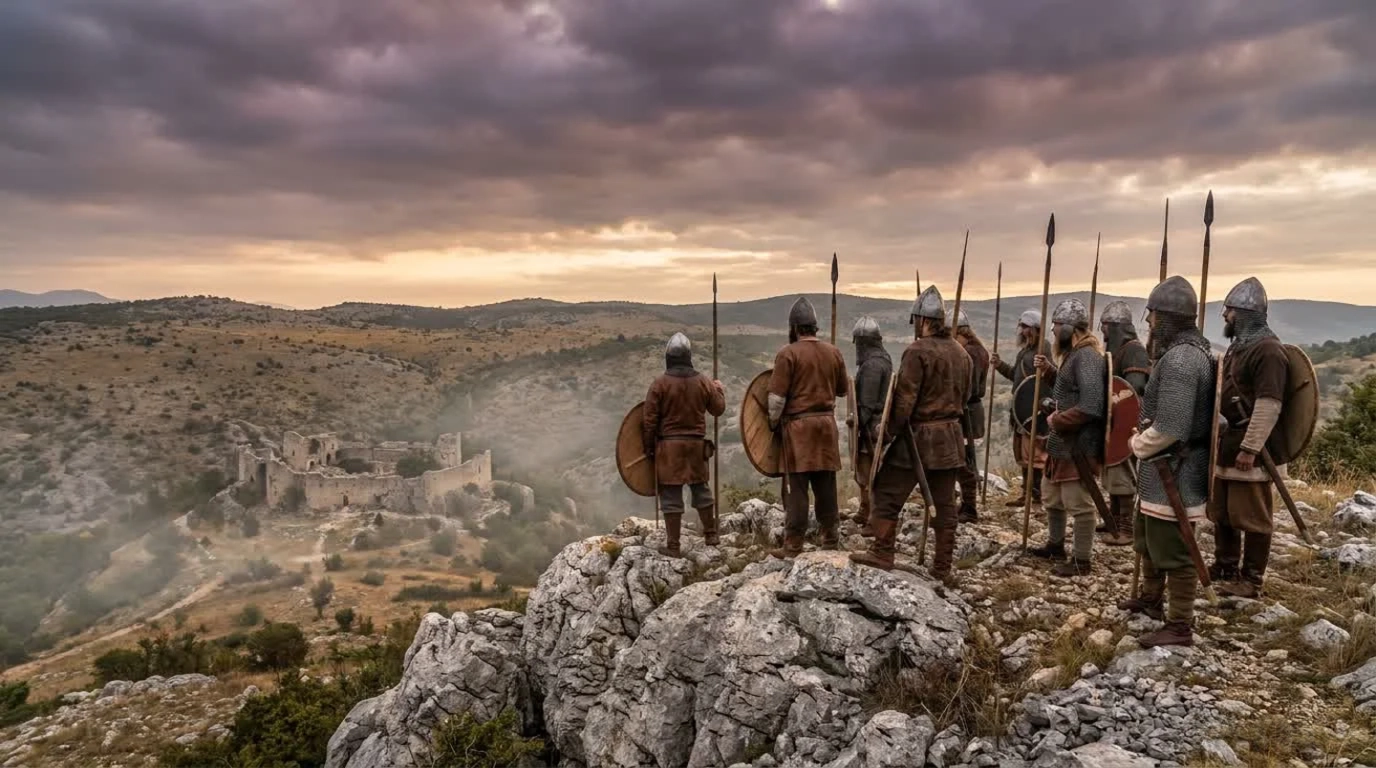


Lorem Ipsum is simply dummy text of the printing and typesetting industry. Lorem Ipsum has been the industrys standard dummy text ever since the 1500s, when an unknown printer took a galley of type and scrambled it to make a type specimen book.
Call Us
+911234567890Location
your1234location.meThe Lost Century: Pagan Gods, Frankish Conquest, and the Baptism of the Croats
Home / The Dawn of Croatia, The Early Middle Ages The Lost Century: Pagan Gods, Frankish Conquest, and the Baptism of the Croats

0 Comments
Introduction
The 8th century is often called the “Dark Age” of Croatian history. With almost no surviving local written documents from this era, it is easy to think nothing happened between the arrival of the Croats in the 7th century and the rise of their powerful dukes in the 9th. But underneath the soil of the Dalmatian Hinterland lies a different story. The 8th century was a chaotic, transitional melting pot. It was the era when the Croats abandoned their old Slavic gods, survived a brutal conquest by Charlemagne’s Frankish Empire, and stepped onto the European stage as a newly baptized nation.
The Ruler: Prince Višeslav (Around 800 AD)
As the 8th century drew to a close, loose alliances of Croatian tribes began consolidating under a single leader. The earliest Croatian ruler whose name is physically preserved on an artifact from this transitional era is Knez Višeslav (Prince Višeslav).
Ruling around the year 800, Višeslav guided his people through one of the most dangerous geopolitical shifts in European history: the massive clash between Emperor Charlemagne (The Frankish Empire) from the west and the Byzantine Empire from the east. To survive between these two superpowers, the Croatian elite made a monumental decision—they chose to embrace Western Christianity.
“Video and image generated by AI for illustrative purposes.”
The Blueprint: The Baptistery of Višeslav
The greatest archaeological treasure from this “lost century” is Višeslav’s Baptistery (Višeslavova krstionica). Discovered in the royal city of Nin, this hexagonal marble font is a masterpiece of early medieval art.
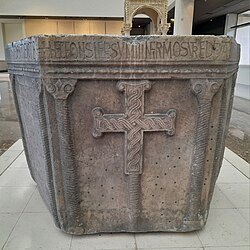
- The Design: Carved from a single block of white marble, the baptistery features a large, beautifully detailed processional cross surrounded by the traditional Croatian wattle (pleter)—a geometric triple-phased rope pattern that would become the national symbol of Croatian culture.
- The Inscription: Written in Latin along the edge, a famous inscription reads: “This font receives the weak, to enlighten them in a Christian way… built in the time of Prince Višeslav.”
This font was not for babies; it was built for the mass baptism of adult Croatian warriors and tribal leaders. They would step completely into the water, washing away their pagan past and emerging as part of the Western Christian world.
The Clash: Toppling Perun for Christ
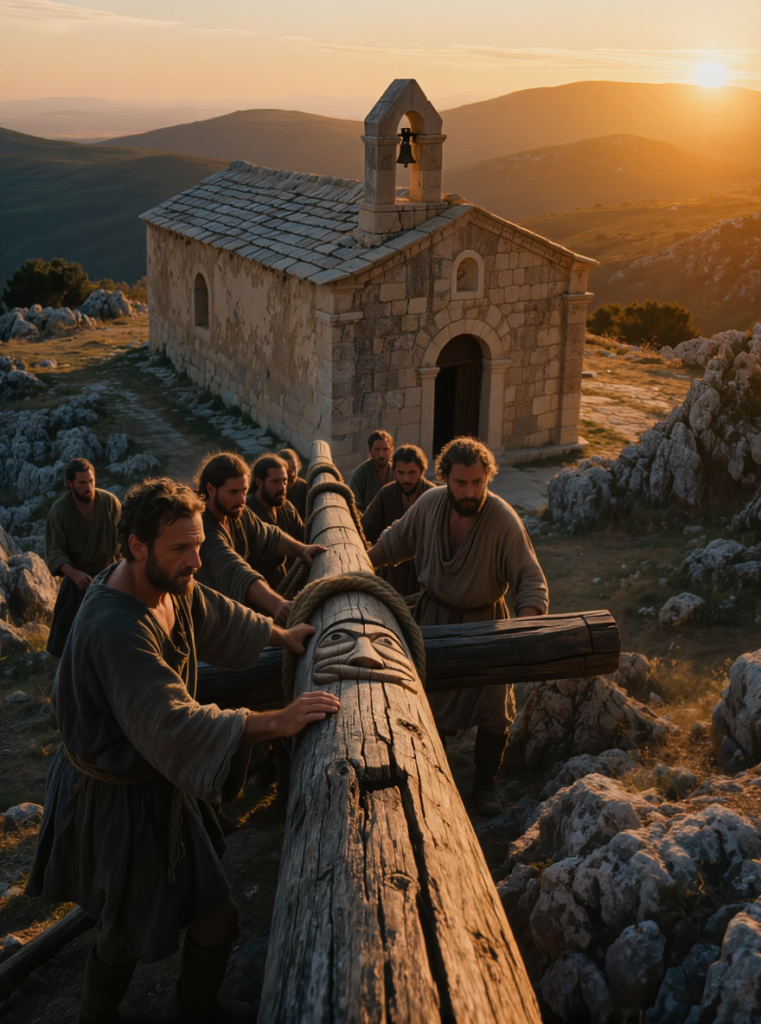
Before the 8th century, the Croats worshipped the old Slavic pantheon. Their supreme god was Perun, the god of thunder and lightning, who was believed to dwell on the highest mountain peaks (like Mount Dinara). His eternal enemy was Veles, the serpent god of the underworld and waters.
The transition to Christianity was a slow and tactical process. Christian priests did not always destroy pagan holy sites; instead, they replaced them.
- High hills dedicated to the thunder god Perun were renamed after Saint George (Sveti Jure) or Saint Michael (Sveti Mihovil)—both warrior saints associated with heights and defeating dragons.
- Pagan burial mounds (gomile) scattered across the Dalmatian Hinterland were slowly replaced by the first small, stone Pre-Romanesque Christian churches.
Traveler’s Note: Where to See the Dawn of Faith
While the original Višeslav’s Baptistery is safely preserved at the Museum of Croatian Archaeological Monuments (MHAS) in Split, you can visit its historical home in the town of Nin. Standing near the ancient Church of the Holy Cross (the smallest cathedral in the world), you can walk the very streets where the old gods of the forest were traded for the crown and cross of a new European state.
Recent Blog